Power Failure Alert Devices: A Practical Guide
A power failure alert device is a small mains-powered GSM unit with its own battery. When the mains drops, it sends an SMS and a missed call to a preset list of numbers, with a date and time stamp; when the mains returns, it sends another. That is the whole job. It does not protect anything, it does not switch anything, and it will not keep your freezer cold. What it buys you is the one thing that decides whether an outage is an inconvenience or a write-off: knowing promptly — measure the actual delivery time at commissioning — that the site has gone dark.
That is worth more than it sounds, because the failure that costs money is almost never the outage itself. It is the outage nobody noticed until Monday.
What the device does, in specifics
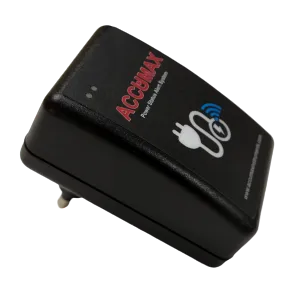
The Accumax power failure SMS alert device is a single-phase unit in a plastic housing with an internal rechargeable lithium-ion battery, so it can transmit after the supply it is watching has gone. Two documented revisions of the product literature exist and they differ, which is worth knowing before you compare quotes:
| Specification | Manual revision | Datasheet revision |
|---|---|---|
| Phase | Single | Single |
| Operating voltage | 100 to 240 V AC | 90 to 270 V AC |
| Battery | 3.7 VDC 1100 mAh Li-Ion, rechargeable | 3.7 VDC 750 mAh Li-Ion, rechargeable |
| Battery standby | Stated but the figure is not legible in the source | 8 hours |
| Dimensions | 83 x 71 x 63 mm | 72 x 46 x 30 mm |
| Weight | 130 gm | 60 gm |
That is a genuine difference in hardware, not a typographical one. Ask which revision you are being offered and get the answer on the quotation. The GSM side is consistent across both: a quad-band module covering GSM 850, EGSM 900, DCS 1800 and PCS 1900, in multi-slot class 12 / class 1-10, taking a micro SIM. Humidity is rated 5 % to 95 % non-condensing.
Alerting is configurable for one to five contacts, using ten-digit mobile numbers, and each alert goes out as both an SMS with a date and time stamp and a missed call. Both channels are active by default.
One honest gap: operating and storage temperature are printed as labels in all three source documents with the value cells blank. If the unit is going into a compressor room, a plant room or a rooftop enclosure, ask Accumax for the rated temperature range in writing rather than assuming it will be comfortable there.
What it is not
Buying this to do a job it does not do is the commonest way to be disappointed by it.
- It is not a UPS or an inverter. It reports; it does not carry load.
- It is not a three-phase supervision relay. The documented unit is single phase. If you need phase failure, phase reversal or imbalance detection on a three-phase supply — which is what actually kills motors — that is a different device, and you should ask whether it can be supplied.
- It is not a monitored alarm service. It messages a list of numbers. Somebody on that list has to be awake and has to act.
- It does not tell you why. A tripped MCB, a blown SMPS fuse and a substation outage all look identical to it.
Being clear about this is what lets you place it correctly: it is the cheapest possible sensor for the single most consequential binary condition on an unattended site.
Where it earns its place
Cold storage and refrigerated stock
A well-insulated cold room does not warm instantly, and that thermal inertia is precisely the window the alert exists to use. How long you actually have depends on the room, the load and the ambient — work it out for your own room rather than trusting a rule of thumb, then check that your escalation chain can get somebody to the site inside that window. If it cannot, the alert is telling you to buy a generator, which is also useful information.
Unmanned pump houses and borewell sites
A pump that has stopped is a tank that is emptying, an irrigation cycle that did not happen, or a dewatering sump that is filling. These sites are unmanned by definition; nobody will notice. This is the strongest single case for the device, because the site visit it saves is a long one.
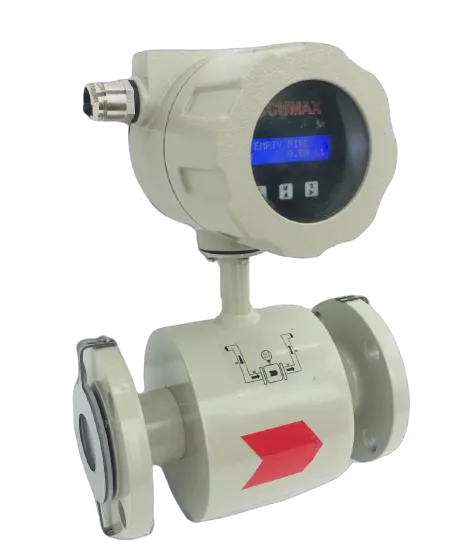
If the site already has instrumentation, check what it reports before adding hardware. The telemetry variant of the Accumax electromagnetic flow meter already carries tamper alert and power failure alert in its cloud application. Groundwater installations built to CGWA guidelines are specified to have power-off detection at the meter, with metering data retained even when the telemetry system is down. A standalone alert device is for sites where nothing else is watching.
Aquaculture, hatcheries and aeration
When aeration stops, dissolved oxygen falls, and in a stocked tank it falls on a timescale measured in tens of minutes. There is no partial failure here and no way to recover the stock afterwards. Same logic for ornamental and laboratory aquaria, and for any recirculating system where the pump is the life support.
Server rooms, comms cabinets and small edge sites
The UPS runtime is finite and, in most small rooms, shorter than anyone believes. The alert starts the clock: you now know whether you are doing an orderly shutdown or waiting it out. Pair it with the actual runtime figure from the UPS, and decide the threshold in advance.
Laboratories, incubators and sample storage
Deep freezers, incubators and stability chambers hold material whose value is the work that went into it, not its replacement cost. The alert is a rounding error against a lost sample set.
How SMS alerting works in practice
The theory is trivial; the field problems are all in the details.
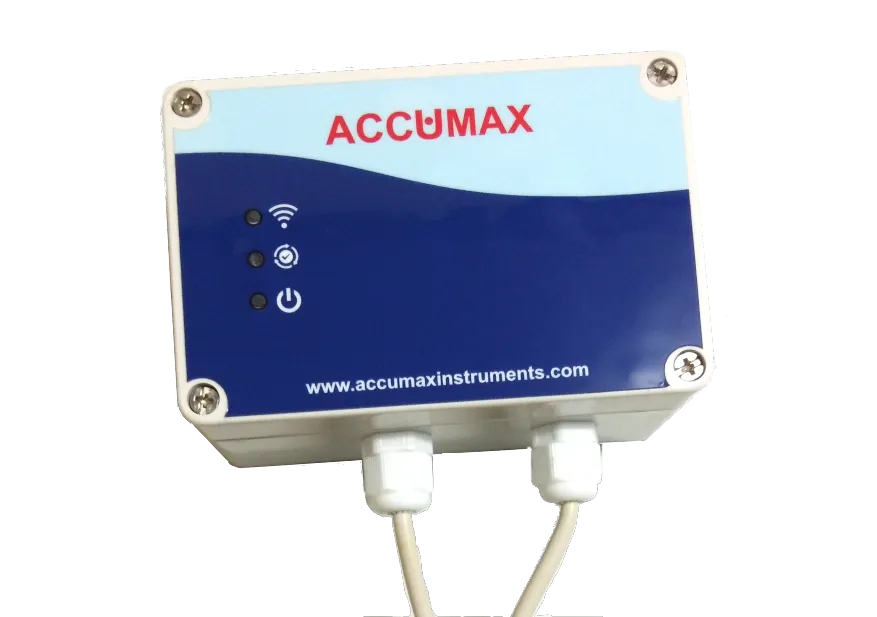
Registration is the first thing to verify. The LEDs tell you the state of the GSM connection without any tooling, and this is what you check at commissioning and on every site visit afterwards:
| Indication | Meaning |
|---|---|
| Green LED continuously on | Power available |
| Green LED continuously off | Power not available |
| Red LED fast blink (64 ms on / 800 ms off) | Not registered to network |
| Red LED slow blink (64 ms on / 3000 ms off) | Registered to network |
| LED blinking | Message being sent |
A red LED blinking fast is the failure everybody discovers on the day it mattered. Check it deliberately.
Signal strength at the actual mounting point, not at the gate. Pump houses are concrete boxes, cold rooms are steel, and basements are basements. Test with the device where it will live, in the enclosure it will live in, with the door shut.
The SIM is the weakest link. The device takes a micro SIM and one is not supplied in the box; the package contains the device and the user manual only. A prepaid SIM that never originates a chargeable event can be deactivated by the operator, and you will not know until an alert fails to arrive. Diarise a recharge and validity check, and use the device’s own status commands as a liveness test.
Use the command set. Configuration is by SMS, protected by a five-digit password with a default of 12345 — change it at commissioning and record where. All SMS commands are case sensitive, which accounts for most “the device is not responding” calls.
| Command | Purpose |
|---|---|
| GETDATA | Request current power status |
| Getinfo | Request device information |
| PasswordSMSON / PasswordSMSOFF | Enable or disable SMS alerting |
| PasswordCALLON / PasswordCALLOFF | Enable or disable missed-call alerting |
Sending GETDATA once a week from a duty phone is a cheap end-to-end test: it proves the SIM, the network, the device and the recipient path in one message.
Keep both channels on. SMS is store-and-forward and can be delayed by minutes under network load. A missed call arrives at the speed of the voice network, and it rings a phone that is on silent for messages. Redundancy here costs nothing.
Think about who is on the list. Five contacts is enough for a real escalation chain and not enough for a distribution list. Put the person who can physically reach the site first, not the manager. Review the list whenever somebody leaves.
Commissioning checklist
- Confirm which hardware revision you have received and file its specification.
- Fit an active SIM with adequate validity; record the number and the recharge date.
- Mount the device where the alert has to work, then verify the red LED is on the slow blink.
- Change the five-digit password from the default and record it in the site file.
- Load one to five recipients, and confirm each is a ten-digit number.
- Confirm SMS and missed-call modes are both active.
- Kill the supply at the isolator and time how long the alert takes to arrive at each recipient.
- Restore supply and confirm the restoration message arrives.
- Send GETDATA from each recipient handset and confirm the reply.
- Write the escalation procedure on a card and leave it at the site, naming who acts and inside what time.
Scaling beyond one signal
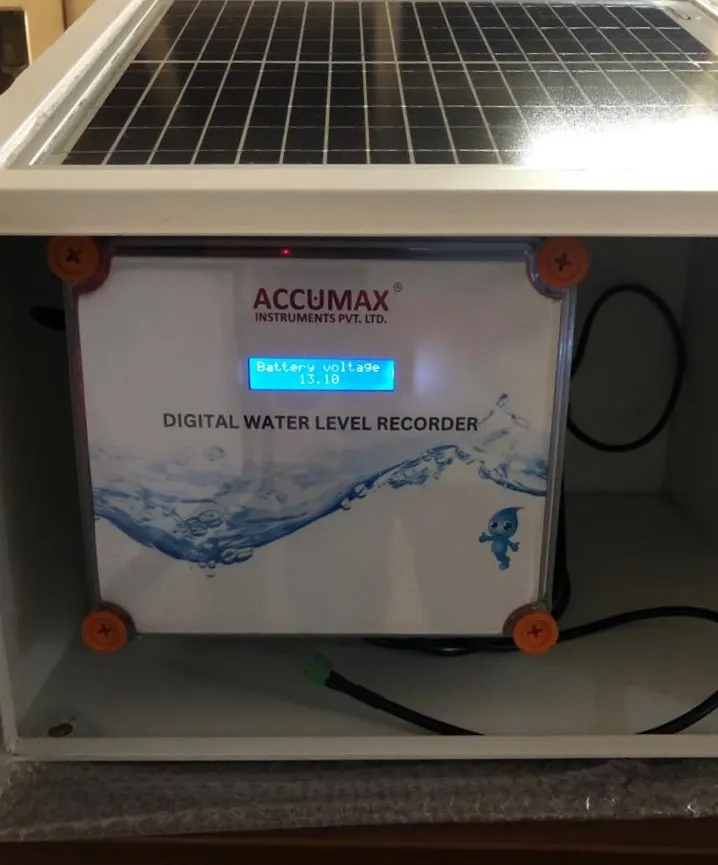
If you find yourself deploying alert devices across many sites, the question shifts from “did power fail” to “what is the state of my estate”. At that point a cellular gateway that pushes field data and threshold alerts over SMS and web — the Accumax IoT device is one — or full telemetry on the instruments themselves, such as the solar-powered digital water level recorder with telemetry that logs battery voltage alongside its measurements, will give you the same warning inside a system that also tells you what happened next. The single-purpose alert device stays the right answer for the site where there is nothing else to watch and no budget for a system.