Flow Meters for ETP and STP: Choosing by Duty
The short answer, duty by duty
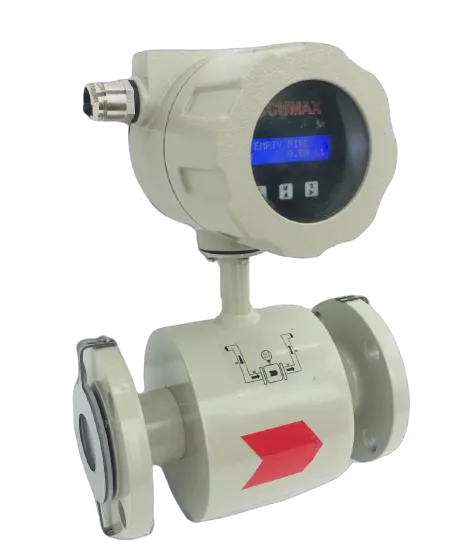
On most lines inside an effluent or sewage treatment plant, the meter you want is electromagnetic. Raw sewage, mixed liquor, return sludge and the majority of aqueous dosing chemicals are all electrically conductive, and an electromagnetic meter puts nothing in the bore for rag and grit to wrap around. The exceptions are the ones that catch people out: non-conductive dosing chemicals, gravity lines that never run full, and very small dosing lines that fall below the meter’s published minimum flow.
| Duty | What the fluid is like | Meter type that suits | The deciding factor |
|---|---|---|---|
| Raw / screened influent | Conductive, rag, grit, variable flow | Electromagnetic, full bore | Nothing in the bore to foul; needs a full pipe |
| Balancing tank transfer | Conductive, some solids | Electromagnetic | Wide turndown across a pumped duty cycle |
| MLSS / aeration recirculation | 3,000-6,000 mg/L solids, conductive | Electromagnetic, abrasion-resistant liner | Liner wear, not measurement, is the failure mode |
| RAS / WAS sludge | Thick, abrasive, intermittent | Electromagnetic with rubber or polyurethane liner | Liner choice and low-flow cut-off setting |
| Aqueous dosing (alum, PAC, caustic, hypo) | Conductive, corrosive, small line | Electromagnetic with Hastelloy electrodes | Electrode material and minimum flow |
| Non-conductive dosing (solvents, oils) | Clean, non-conductive | Turbine | Electromagnetic will not read it at all |
| Clean service / utility water | Clean, no solids | Paddle wheel or turbine | Cost per point, not process risk |
| Final treated discharge | Conductive, low solids | Electromagnetic with logging or telemetry | The data trail, not the sensor |
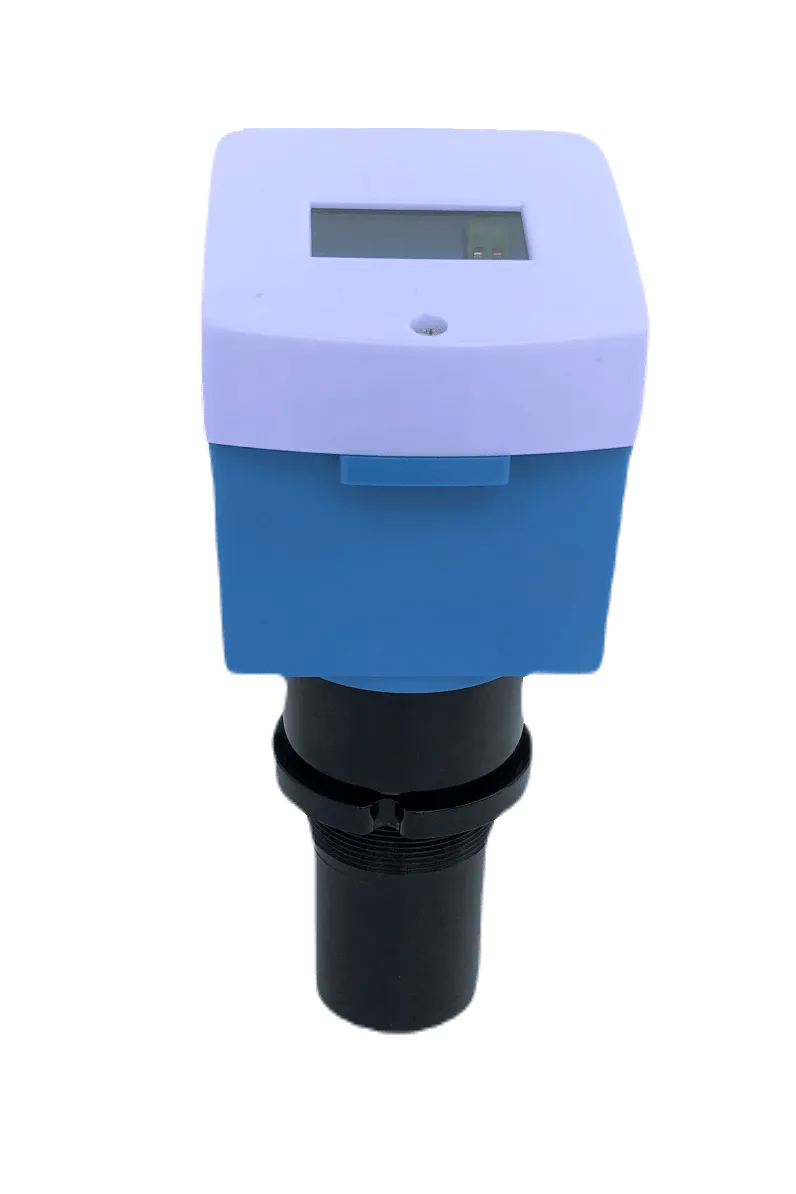
| Clarifier / sump level | Open liquid surface, sludge and slurry service | Non-contact ultrasonic level | Not a flow duty at all - and it reads the surface, not the blanket interface |
Why electromagnetic is the default in wastewater
Conductivity is the first gate, and it is a real gate
An electromagnetic meter works by measuring the voltage a conductive liquid generates as it moves through a magnetic field. No conductivity, no signal. The Accumax electromagnetic flow meter is specified for conductive liquid with an electrical conductivity of at least 20 µS/cm for water.
Municipal sewage and most industrial effluent sit comfortably above that. What does not is the clean end of some plants: RO permeate, condensate recovery, demineralised water for boiler make-up. If a line in your ETP carries treated water that has had its ions stripped out, measure the conductivity at that point before you specify a magnetic meter for it.
Liner and electrode are the decisions that actually bite
Once you have chosen electromagnetic, what you are really specifying is which materials survive your effluent for the next several years.
| Wetted part | Published options | Published temperature limit | Where it earns its place |
|---|---|---|---|
| Liner | PTFE (Teflon) | up to 230 °C | Chemically aggressive effluent, hot process streams |
| Liner | Rubber (Neoprene) | up to 85 °C | Abrasive sludge and grit-bearing lines |
| Liner | Polyurethane (listed as a customisation option) | not published | Ask before specifying it for an abrasive duty |
| Electrode | SS316L | — | General effluent duty |
| Electrode | Hastelloy C22 | — | Chemical dosing lines and aggressive effluent |
| Flow tube | SS304 / SS316 | — | Match to the chemistry, not to the pipe |
| Flange | MS #150 / SS304 #150 / SS316 #150 | — | Class 150, 300 and 600 appear in the ordering code |
The medium temperature range on the datasheet reads -10 (0) °C to +200 °C for the remote display version, with the liner limits above applied on top, and process pressure is quoted at 20 bar (20 kg/cm2). Protection classes offered are IP66, IP67 and IP68 — confirm which applies to the exact build you order, because a sensor in a chamber that floods each monsoon is an IP68 question, not an IP66 one.
Raw sewage, influent and balancing tank transfer
Full-bore electromagnetic sizes run from 15 NB to 350 NB, with an overall measuring range of 0.2 m3/h to 1300 m3/h. The datasheet’s own note on the flow chart is worth reading before you size anything: minimum flow is, in general, 5% of maximum flow. That is roughly a 20:1 turndown within a given line size — usually enough to cover a pumped influent duty that swings between night minimum and morning peak, but not enough to cover a badly oversized pipe.
| Line size | Min flow | Max flow |
|---|---|---|
| 50 NB | 1.8 m3/h | 36 m3/h |
| 80 NB | 4.5 m3/h | 90 m3/h |
| 100 NB | 6.05 m3/h | 121 m3/h |
| 150 NB | 15.9 m3/h | 318 m3/h |
| 200 NB | 22.5 m3/h | 450 m3/h |
| 300 NB | 42.5 m3/h | 850 m3/h |
Size on velocity, not on the pipe you happen to have. In sewage you want enough velocity to keep solids in suspension through the bore, which often means reducing the meter one size below an over-generous line and expanding back out after it.
The one condition an electromagnetic meter cannot escape is a full pipe. A partially filled gravity sewer will read low and read nonsense. The meter offers an empty pipe alert with a disable/enable option, which tells you the pipe emptied — it does not measure a part-full pipe. If your only tapping point is a gravity line, find a pumped section, build an inverted siphon, or accept that the duty needs open-channel measurement instead.
Aeration, MLSS and return sludge
Mixed liquor and return activated sludge are, from the meter’s point of view, easy: highly conductive, and full of solids a full-bore meter simply passes. The engineering problem here is wear and installation, not signal.
Three settings matter on these lines. The low flow cut-off is user configurable from 0 to 10%, which stops a stopped RAS pump from accumulating creep on the totaliser. Flow direction is configurable as forward, reverse or bidirectional, with reverse indicated by a minus sign before the flow rate. And the meter carries three totalisers — positive, negative, and a delta totaliser equal to positive minus negative — which is the number you actually want on a recirculation duty.
Earthing deserves more attention than it gets on a sludge line. The sensor has a built-in grounding electrode as a third electrode; on plastic pipelines and lined metal pipes, grounding rings at both ends are offered as an option, and the manual is explicit that they are not included in the delivery. ETP and STP piping is very often HDPE or lined, so put the rings on the purchase order rather than discovering the omission at commissioning.
Clarifier and sump level is a different instrument. The ultrasonic level transmitter is specified for continuous non-contact measurement of liquid, slurry, sludge and solids, with a Modbus RTU interface reading level in metres. Its published material does not carry the measuring range, accuracy, resolution or IP figures, so request those in writing rather than assume them.
Chemical dosing lines
Dosing is where the default answer stops being automatic, for two reasons.
Flow rate. The smallest published line size on the electromagnetic meter is 15 NB, with a minimum flow of 0.2 m3/h — that is 200 litres per hour. A great many polymer, hypochlorite and antiscalant dosing lines run well below 200 L/h. Below that published minimum you are outside the meter’s stated range, and the honest answer is to check the required turndown against the flow table before assuming a magnetic meter fits.
Conductivity. Aqueous alum, PAC, lime slurry, caustic and hypochlorite solutions are conductive, so metering them electromagnetically is straightforward — with Hastelloy C22 electrodes rather than SS316L where the chemistry is aggressive. Solvents, oils and hydrocarbon-based additives are not conductive, and an electromagnetic meter will not read them in any configuration. For those, the turbine flow meter is specified for oil, solvent, diesel and chemical service at ±1% FS, for liquid density between 700 and 1300 kg/m3, with SS304 or SS316 construction and pressure up to 30 kg/cm2. Two of its published requirements matter: a strainer must be fitted before the sensor to keep solid particles out, and periodic cleaning of the sensor is called mandatory. That rules it out of anything solids-bearing.
For clean utility and service water rather than process chemicals, the paddle wheel flow meter covers 25 NB upward with insertion types for 40 to 100 NB, at +2% FS, with a GF Nylon housing, polypropylene impeller and ceramic bearing, rated to 5 kg/cm2 and 50 °C. That ceiling, plus a moving impeller, keeps it on clean duty.
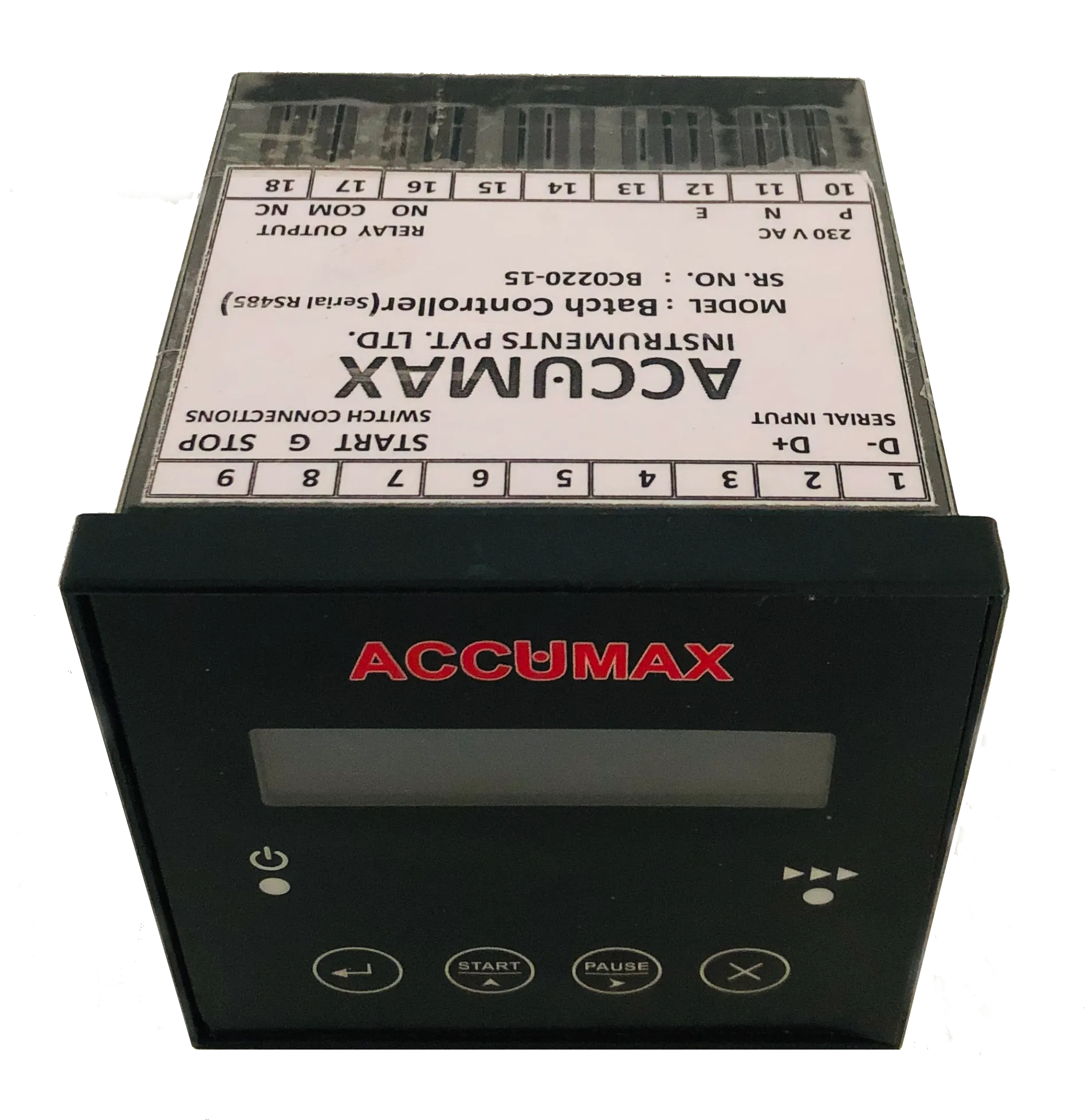
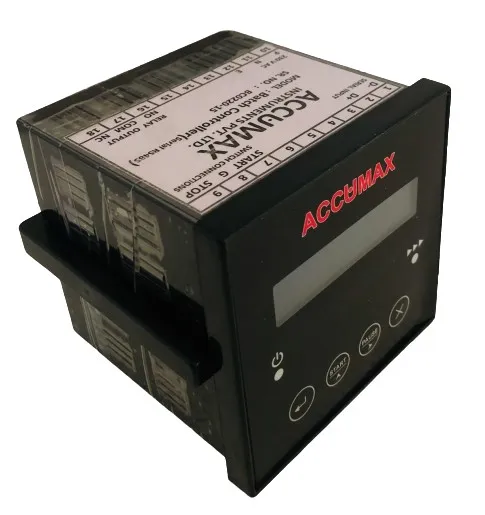
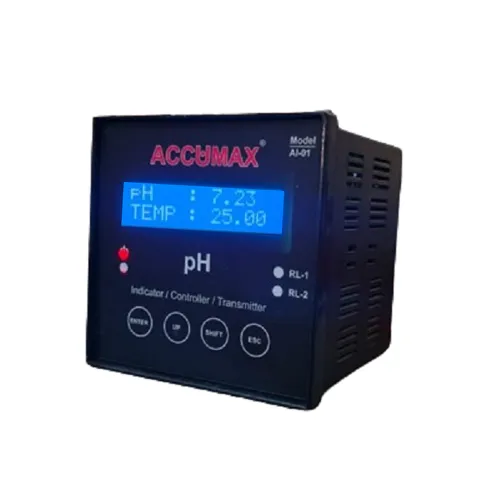
On the control side, the universal flow controller documents a Pulsar mode that triggers a task on completion of a preset volume — explicitly a dosing application — and a PID mode that controls flow using a 4-20 mA output. The dosing controller acts on a preset quantity, with an RS 485 link and timer setup. Where the loop is neutralisation, the pH indicator, controller and transmitter reads 0.00 to 14 pH at 0.10 pH accuracy with a Pt-100 two-wire temperature input, automatic or manual compensation, two relays and a choice of two or four set points, in a panel-mount (IP 20) or field-mount (IP65) housing. Its sensor is rated to 6 bar with a 3/4” BSP M connection.
Final discharge and the reporting duty
At the outfall the sensor is the easy part. What gets scrutinised is the data trail.
Consent conditions, not vendors, decide what you must monitor and how often you must upload it. Continuous effluent monitoring obligations in India apply to specific industry categories and to CETPs, and the parameter list, averaging period and server-connection requirement vary by state board and by consent. Read your own consent before you buy the instrument, and confirm the data path your board will accept.
What the instruments give you to work with:
- The electromagnetic meter offers 4-20 mA, RS485 and pulse outputs, a 10-digit totaliser, and totaliser reset under password protection — that last point matters when a totaliser reading is evidence.
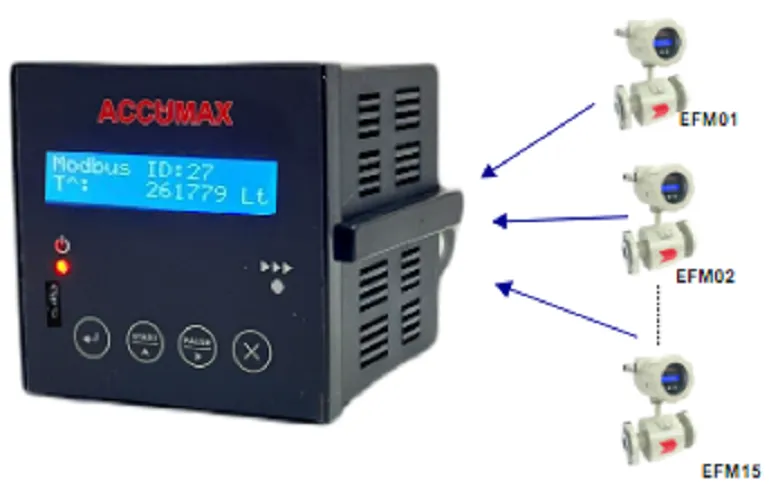
- The data logger for flow meter reads up to 15 devices over RS485 Modbus and writes .CSV files to an SD card at a preset interval, naming files in a DEVICE ID / MONTH / YEAR format such as 10JAN24. It records flow, positive totaliser, totaliser and final totaliser, each with date and time, flow in litre/hr and totaliser in litres. It is an indoor unit in a corrosion-resistant enclosure, powered at 230 VAC or 24 VDC to order.
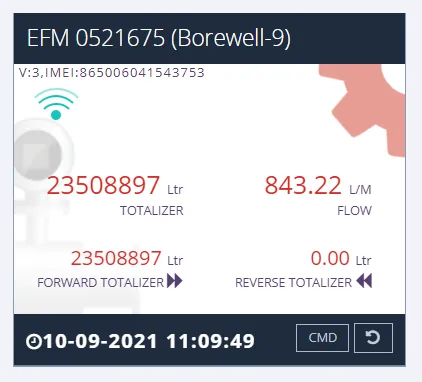
- The telemetry variant of the electromagnetic meter is compatible with GPRS/GPS and pushes to a cloud dashboard with reports, real-time access, multi-user login, tabular and chart views, and tamper and power-failure alerts. The cloud application is a yearly subscription — an operating cost line, not a one-time purchase.
If the site also abstracts groundwater, that is a separate obligation with its own instrument. The digital flow meter with telemetry system is built to CGWA guidelines, which call for accuracy better than ±2% from 10% to 100% of maximum flow, a turndown of 10 or above, at least four-point calibration at 10%, 40%, 70% and 100% of rated flow at an ISO 17025:2017 accredited laboratory, IP68 protection, transmission at least twice a day, and store-and-forward buffering when the network drops. Do not conflate the two duties on one purchase order.
Installation rules that decide whether the number is true
These are the published requirements for the Accumax electromagnetic meter, and the ones most often broken on a treatment plant retrofit:
| Requirement | Published figure |
|---|---|
| Upstream distance from a T-connection | 10 DN |
| Clearance to a downstream gate valve | 5 metres between the meter axis and the valve axis |
| Pump position | Always downstream of the pump, never upstream, to avoid vacuum |
| Preferred orientation | Vertical or inclined pipe with upward flow |
| Orientation to avoid | Vertical pipe with a free outlet |
| Converter position on a horizontal pipe | Converter or junction box on the upper part |
| Remote mounting | Integral, or remote up to 10 m cable length |
The upward-flow preference is not fussiness. It keeps the bore full and sweeps air out, which is precisely the failure you get on an ETP line that draws air past a leaking gland.
What to ask before you release the purchase order
Several figures a specifying engineer needs are not in the published material, and no supplier should object to being asked for them in writing:
- Accuracy and repeatability for the electromagnetic meter — the datasheet prints the row labels but the values are not in the published text.
- The ambient temperature range for the transmitter, as distinct from the medium temperature range.
- Which protection class — IP66, IP67 or IP68 — applies to your exact ordered configuration.
- Temperature and abrasion limits for the polyurethane liner option, which are not published alongside the PTFE and rubber figures.
- A copy of the wet calibration certificate. The datasheet states calibration is performed at an IEC/ISO/EN 17025 accredited facility and lists ISO 4064:2014 among its approvals; ask for the document, not the sentence.
- For any hazardous area — digester gas zones, solvent handling — the datasheet names flameproof and potentially-explosive-atmosphere construction standards (IS/IEC 60079-1:2007 and IS/IEC 60079-0:2004) but shows no certificate or approval number. Ask for the certificate before siting a meter in a classified area.
- Confirmation that the quoted specifications are final; Accumax product pages currently state that specifications are pending engineering sign-off.
- Grounding rings, quantity and material, as a separate line item for every plastic or lined pipeline.
Take that list to the pre-order meeting rather than to the commissioning meeting.